
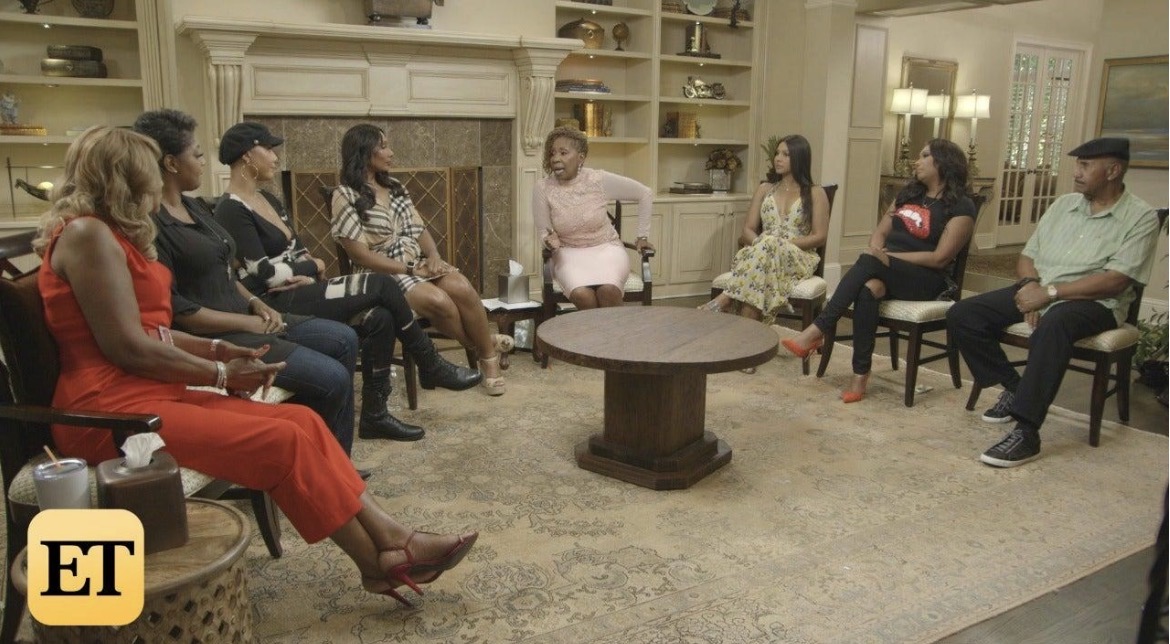
Iyanla Vanzant was trying to ask Evelyn Braxton a question about her youngest daughter.
“Can I ask you something, Miss Evelyn? Do you know what her pain is?”
Before Vanzant could finish explaining why she was asking, Tamar Braxton interrupted.
What followed was another heated exchange between the singer and the spiritual adviser who had been invited to help the Braxton family address years of unresolved conflict.
Tamar objected to Vanzant’s characterization of her behavior. Vanzant attempted to continue. Their disagreement escalated until Evelyn raised her voice and demanded that her daughter stop.
Only then could Vanzant finish the point she had been trying to make.
She suggested that someone fighting so intensely to be seen or heard may be responding to an earlier experience of feeling overlooked.
It was Vanzant’s interpretation of Tamar’s behavior, not an established explanation for it. But the sequence was striking. Vanzant had been interrupted while attempting to understand the very behavior she was describing.
The confrontation aired in October 2018 during the sixth season of Braxton Family Values.
On October 21, 2026, Vanzant revisited the controversy during an appearance on BET’s The Jason Lee Show, again denying Tamar’s allegation that she had been sexually shamed during the family intervention.
The disagreement has remained public for eight years.
Yet the circumstances surrounding that confrontation reveal something that received considerably less attention than the argument itself.
The Braxtons were attempting to repair family relationships while those same relationships were part of the entertainment they were being paid to produce.
And this wasn’t the family’s first televised attempt at reconciliation.
Before Iyanla, there were other interventions
By the time Vanzant appeared on Braxton Family Values, viewers were already familiar with the family’s attempts to resolve disagreements through outside guidance.
In 2013, the series aired an episode titled The Tamar-vention. The sisters attended an emergency therapy session that escalated into another confrontation, with Toni eventually leaving.
Two years later, Evelyn and Michael Braxton arranged a family meeting involving Bishop T.D. Jakes. The counseling unfolded across episodes broadcast in July 2015.
Those earlier interventions occurred under different circumstances. Their existence does not establish that counseling accomplished nothing.
What they do establish is that family intervention had become a recurring feature of the Braxtons’ televised history.
Viewers had watched the sisters disagree, seek help, and return to the screen with further disagreements.
The family wasn’t simply allowing audiences to witness its arguments. Audiences were also being invited to watch its attempts at reconciliation.
When Vanzant entered the picture in 2018, she was stepping into relationships that had been developing long before her arrival.
She was also entering a television production experiencing difficulties of its own.
The sisters were divided before the intervention began
During the sixth season, Toni, Tamar, Towanda, and Trina stopped filming amid a dispute over their contracts with the production. Their mother, Evelyn, also reportedly participated in the work stoppage.
Traci chose to continue working.
That decision created considerable tension between the sisters, with Traci publicly describing the hurt she experienced after being labeled a traitor.
In a September 2018 interview with Entertainment Tonight, Traci explained that she believed she had an obligation to honor her existing contract.
Her sisters approached the dispute differently.
Their disagreement exposed a complication extending beyond family loyalty. The sisters were also professional colleagues whose individual decisions affected a shared business.
For Traci, continuing to work represented fulfilling a commitment. For the sisters who stopped filming, collective action was part of seeking better contractual terms.
Neither position eliminated their relationship as sisters.
But their relationship as sisters didn’t eliminate their professional interests, either.
Vanzant eventually questioned the differing expectations surrounding Traci’s decision.
If other sisters were entitled to pursue their individual opportunities, why was Traci’s decision to continue working being treated differently?
It was a question about fairness that had implications beyond the production dispute.
The family had developed different expectations for different members.
Those differences became especially visible when Vanzant began addressing their behavior.
The different treatment of Toni and Tamar
One of the earliest confrontations involved the family’s failure to honor an agreed-upon schedule.

Vanzant described arranging her day around the commitment, including eating a meal in her car to arrive on time.
Tamar arrived late. Toni had an appointment that affected her participation.
Vanzant expressed frustration with the lack of consistency and respect for the process.
There was, however, a noticeable difference in how the two sisters were addressed.
During the following session, Vanzant acknowledged Toni’s lateness, but the exchange was less confrontational than the one that developed with Tamar.
That difference raises an interesting question about the expectations placed on each sister.
Toni occupied a unique position within the family. She was the eldest, the original breakout star, and an internationally successful recording artist whose career preceded the family’s reality television fame.
She also had documented medical challenges, including lupus, a serious autoimmune disease she had publicly discussed for years.
Those health concerns cannot reasonably be dismissed as excuses to avoid difficult conversations.
At the same time, a legitimate medical condition doesn’t automatically explain every difference in how family members are treated.
The issue isn’t whether Toni’s health problems were real. They were.
The more relevant question is whether her position in the family, professional standing, and individual circumstances contributed to different expectations surrounding her participation.
Longtime viewers had seen Toni express reluctance about uncomfortable family gatherings before. During a family trip in the show’s first season, she discussed wanting to numb herself to the prospect of spending time around her divorced parents.
That earlier scene doesn’t establish why Toni missed or avoided any later activity. It does provide context for how uncomfortable family situations had been portrayed on the series.
Tamar, meanwhile, was frequently the sister whose interruptions and confrontational responses drew immediate attention.
But the 2018 intervention eventually revealed that differences in accountability extended much further back than the filming schedule.
Michael Braxton acknowledged a problem in his parenting
As the confrontation continued, Vanzant questioned Michael Braxton Sr. about Tamar’s childhood behavior.
Michael acknowledged that Tamar had been allowed to express herself in ways that brought disciplinary consequences for her older sisters.
When asked why the same standards had not been applied to Tamar, he answered:
“Because of my passive actions.”
Vanzant pressed him further, suggesting that his emotional absence and guilt may have influenced his parenting.
He agreed.
It was a significant admission from the family patriarch.
The discussion was no longer limited to Tamar’s conduct during a television intervention. It had moved into the history of how that conduct was addressed within the family.
Michael’s acknowledgment also offered context for his relatively restrained response as the argument between Tamar and Vanzant unfolded in front of him.
His silence alone cannot establish what he was thinking. His admission concerning past passivity, however, makes the comparison relevant.
Evelyn’s response was different.
She initially allowed the exchange to continue before intervening when Tamar’s conduct reached a point she was unwilling to accept.
“Wait a minute!” she demanded.
Vanzant had repeatedly attempted to direct the conversation. It was Evelyn’s raised voice that finally interrupted the escalating confrontation.
The scene reflected an uncomfortable family reality: the parents were being asked to examine patterns they had helped establish while those patterns were playing out in front of them.
Tamar continued challenging Vanzant even with both parents present, suggesting that their presence did not automatically change how she responded to confrontation.
But the intervention didn’t end with that argument.
During the closing session, Tamar acknowledged being spoiled, unkind, unfair, and disrespectful. She admitted that she had entered the process wanting to prove herself right and expressed a desire to become a better sister.
That acknowledgment deserves a place in the record.
A complete examination of the intervention cannot focus exclusively on Tamar’s interruptions while overlooking her eventual willingness to recognize her own conduct.
Nor can her apology establish that every disagreement arising from the sessions had been resolved.
The allegation that changed the conversation
Before the intervention episodes aired, Tamar appeared on The Wendy Williams Show in September 2018 and publicly disclosed that she had experienced childhood sexual abuse involving members of both sides of her family.
She alleged that her private history had been raised during the Braxton intervention without her permission and that she felt sexually shamed.
In an Instagram statement published September 13, Tamar explained that she had been deeply affected by losing control over when and how that information was disclosed.
Her central complaint was not simply that Vanzant had confronted her.
Tamar believed deeply personal information had been introduced into the session without her consent.
The broadcast episodes did not show the complete exchange at the center of that allegation.
That creates an important limitation.
Viewers can evaluate Tamar’s visible conduct during the intervention. They can examine how Vanzant responded, how the parents participated, and how the sisters addressed one another.
But the edited broadcast does not independently establish exactly what was said when Tamar’s abuse history was raised, who introduced the information, or what understanding existed about discussing it.
That distinction matters because Tamar’s behavior during one portion of the intervention does not determine whether her boundaries were respected during another.
A participant can behave disrespectfully and still have a legitimate expectation of privacy.
Similarly, a facilitator can reasonably demand accountability while disputing an allegation about her own conduct.
Vanzant denied Tamar’s characterization of the encounter in a January 2019 interview with MadameNoire. She maintained that the family had invited her to help address its problems and rejected the suggestion that her work involved degrading or dishonoring Black women.
Eight years later, she continues to stand by that position.
Iyanla responds again in 2026
During her October 21 appearance on The Jason Lee Show, Vanzant revisited the Braxton intervention after Lee described his own difficult relationship with Tamar.
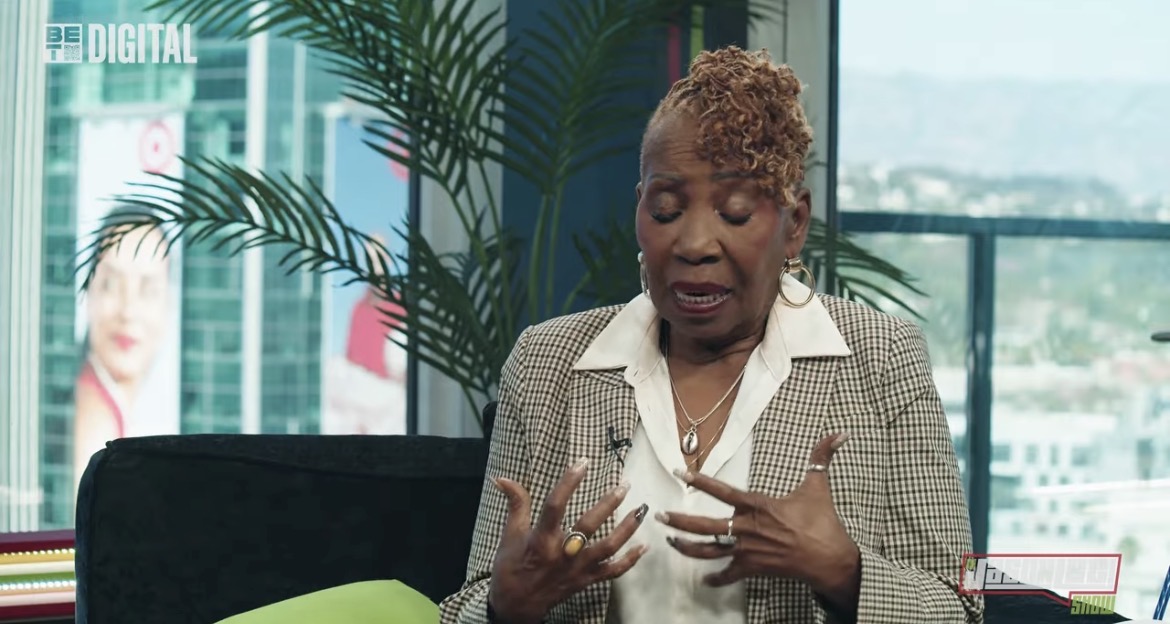
Lee suggested that becoming close to Tamar had influenced his earlier perception of Vanzant. He explained that his subsequent experiences with the singer caused him to reconsider that perspective.
His account introduced another personal interpretation of Tamar’s behavior. It did not independently establish that Tamar had intentionally manipulated either relationship.
Vanzant emphasized that the Braxtons had invited her into their environment.
“I went on their show. They did not come on mine,” she said.
She also described Tamar as someone she loved but did not consider well, explaining that she meant someone who was imbalanced, out of alignment, or out of touch.
When Lee pressed her about the seriousness of the sex-shaming accusation, Vanzant emphatically denied it.
She characterized the account using language that included “delusional,” “out of touch,” “misaligned,” and “bad spiritual hygiene.”
Those were Vanzant’s judgments, not independently established conclusions about Tamar’s mental health or perception of reality.
Vanzant said she had contacted Tamar and the family to challenge the allegation and protect her own reputation.
She also maintained that she had no difficulty being viewed negatively if that was a consequence of confronting someone she believed needed help.
The conversation then moved beyond the original dispute.
Accountability, betrayal, and the question of forgiveness
Around the 13-minute mark of the interview, Vanzant explained why she no longer believes Tamar needs to answer directly to her.
She suggested that Tamar would eventually have to confront the consequences of her own statements and framed that accountability in spiritual terms.
In Vanzant’s view, Tamar would ultimately answer to God rather than to her.
The discussion then turned toward betrayal and whether a person who has damaged someone’s trust should be allowed back into that person’s life.
Vanzant explained that when someone betrays her, she begins by examining her own participation in the situation.
She asks herself how the relationship developed, what she contributed, and what she needs to learn.
Only after that examination does she decide what boundaries are necessary going forward.
Her comments distinguished between moving beyond a painful experience and restoring the relationship to its previous condition.
Forgiveness, in her explanation, doesn’t necessarily mean returning someone to the same level of access.
That distinction adds another dimension to the Braxton controversy.
In 2018, Vanzant was asking Evelyn whether she understood the pain beneath Tamar’s behavior. She challenged Michael Sr. to acknowledge how his parental absence may have contributed to the family’s difficulties.
In 2026, Vanzant was still discussing personal responsibility, but she was also defending herself against an allegation that arose from the process she had been invited to facilitate.
The woman brought in to question the family’s conduct had become the subject of questions about her own.
Her new interview makes her position clear. She rejects Tamar’s accusation.
It does not provide a complete, independently verifiable account of the disputed disclosure.
And despite the years that have passed, the public disagreement remains unresolved.
The difficulty of healing while providing entertainment
The Braxtons’ situation presents a conflict that extends beyond any single personality.
Reality television depends on access.
Audiences become invested because they are allowed to witness disagreements, disappointments, emotional revelations, and moments that might otherwise remain private.
For the Braxton family, that access also supported a successful television franchise.
But the process of working through family conflict does not necessarily follow the requirements of a production schedule.
Some conversations require time. Others require privacy. Participants may be prepared to discuss one issue while being unwilling to address another.
A television production has different responsibilities, including contractual obligations, scheduled filming, editorial decisions, and completed episodes to deliver.
Those demands are not inherently incompatible with meaningful personal conversations.
They do, however, create conditions worth examining when a production begins documenting an effort to repair the very relationships on which the show depends.
The 2018 intervention was not conducted in isolation from the family’s professional disputes.
Traci was defending her decision to honor her contract. Her sisters were dealing with the consequences of their work stoppage. Vanzant expected the family to respect the process they had agreed to participate in.
And the cameras were there to capture what happened.
For Tamar, the experience also involved an allegation that deeply personal information had been introduced without her consent.
The question is not whether families should ever discuss their problems publicly. That decision belongs to the individuals involved.
It is whether a public setting can accommodate the needs of people who may not agree about what should be discussed, who should lead the conversation, or when a subject becomes too personal to continue.
The Braxtons’ repeated televised interventions make that question particularly relevant.
And subsequent events demonstrate that the boundaries between personal experiences and television production remained a concern.
In 2020, Tamar publicly criticized how WE tv was portraying deeply personal events involving her life. In response to questions about continuing the family series, Trina and Towanda spoke about their own experiences and the difficulty of telling a family story without claiming ownership of Tamar’s.
That disagreement extended the discussion beyond the 2018 intervention.
Family members did not necessarily agree about which experiences belonged to the individual, which affected everyone, or how those experiences should be presented to viewers.
For a reality television family, those disagreements carry consequences beyond the home.
Who gets to tell the family story?
Years after the Iyanla controversy, another disagreement brought questions about disclosure and family boundaries into public view.
During the second season of The Braxtons in 2025, Tamar discussed her intention to provide a platform for her niece, Ashlee Braxton, to speak about experiences Ashlee had publicly described concerning her upbringing and family relationships.
Tamar said she received a cease-and-desist letter before the proposed podcast conversation took place. Other family members disputed responsibility for the legal action.
The circumstances differ substantially from the 2018 intervention, and Ashlee’s allegations warrant independent examination rather than being used to establish conclusions about unrelated events.
Nevertheless, the dispute once again raised questions about who gets to speak, who objects, and what happens when a family’s private experiences become subjects of public discussion.
In 2018, Tamar objected to what she described as losing control over her own disclosure.
In the later controversy, she said she wanted to provide a setting in which another family member could share her experiences.
Those situations are not interchangeable.
But both illustrate how difficult it can become for a family accustomed to public storytelling to agree on the boundaries of that storytelling.
The Braxtons have spent years documenting their relationships for audiences.
The challenge is determining where the family’s shared story ends and an individual’s right to tell—or withhold—their personal story begins.
What the intervention actually established
It would be inaccurate to describe the 2018 intervention as nothing more than Iyanla Vanzant humiliating Tamar Braxton.
The televised sessions show Vanzant challenging conduct that disrupted the process. Michael Sr. acknowledged failures in his parenting. Evelyn confronted her daughter’s behavior. Traci had an opportunity to explain how the contract dispute affected her.
And Tamar ultimately recognized aspects of her own behavior and apologized.
Those moments were part of the intervention.
It would be equally inaccurate to suggest that Tamar’s allegation can be dismissed simply because she was argumentative during filming.
The available broadcast does not independently establish what occurred during the disputed disclosure, and Vanzant continues to deny Tamar’s account.
The distinction between those issues is essential.
What viewers can examine is how a family, already divided by longstanding relationship difficulties and a professional dispute, attempted to address those problems through another televised intervention.
What viewers cannot determine from the broadcast alone is the full extent of what each person experienced outside the edited footage.
The sessions produced visible moments of accountability. They also produced another disagreement that followed the family beyond the episodes.
In 2018, Tamar returned to the table and apologized to her sisters.
The show could present that moment as part of its resolution.
Eight years later, Vanzant was still being asked to account for what happened.
The show could bring the family to the table. It couldn’t make that table private.
Sources and further viewing
Original television history
- Braxton Family Values — Season 3, “The Tamar-vention” (2013)
- Braxton Family Values — Season 4, “Divine Intervention” (2015)
- Iyanla Vanzant and the Braxton family intervention — Entertainment Tonight, September 2018
- 2018 intervention recap and family disclosures — Urban Belle
The family and production dispute
- Traci Braxton addresses continuing production — Entertainment Tonight, September 2018
- Tamar’s concerns before the intervention — Entertainment Tonight, September 2018
- Braxton Family Values production walkout — TMZ, June 2018
The Tamar–Iyanla disagreement
- Tamar’s September 2018 public statement — TheGrio
- Tamar and Iyanla’s confrontation — MadameNoire, September 2018
- Iyanla’s original response — MadameNoire, January 2019
- The sisters reflect on their reconciliation — Entertainment Tonight, April 2019
- Trina and Towanda discuss the family’s later production dispute — Entertainment Tonight, November 2020
The 2026 interview
- Iyanla Vanzant on The Jason Lee Show — BET Digital, October 21, 2026
Watch: Iyanla Vanzant on The Jason Lee Show ↗